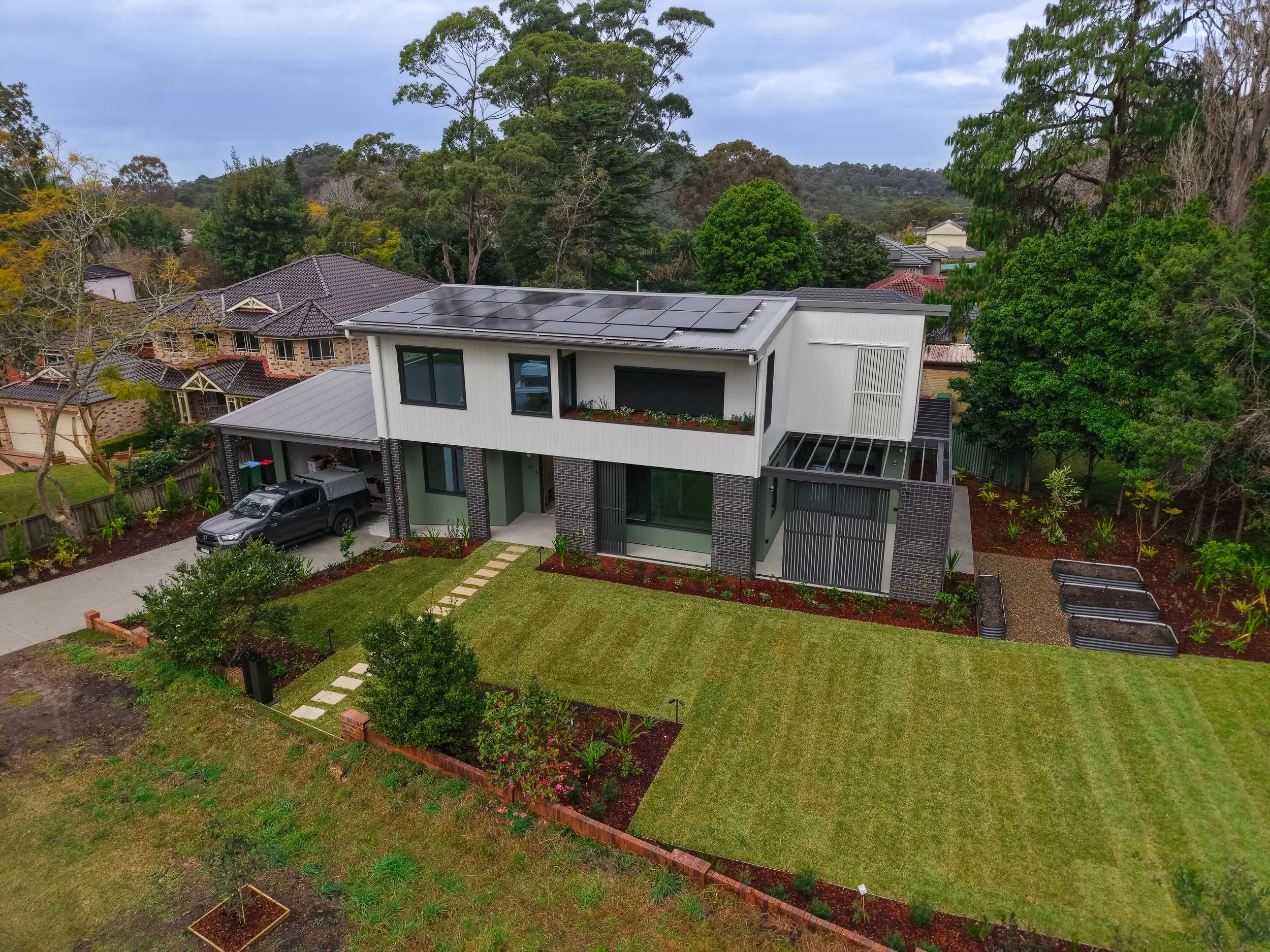
what is a passive house?
Passive House (or Passivhaus) was developed in Germany over 30 years ago. It’s based on five key building principles that make homes more efficient, comfortable, and healthy to live in.
Passive House benefits:
· Warm in winter, cool in summer
· Cleaner, healthier air inside
· Very low energy use (lower energy bills)
· Quiet, comfortable spaces
Built to a Different Standard:
Even homes built to modern Australian Building Standards can be thermally inefficient. Passive House addresses this through smarter construction, better insulation, and fresh air systems that don’t waste energy.
At Point 6, we’re not just building to minimum Australian Building Standards. We use Passive House principles to build for comfort, performance, and long-term value.
The 5 Principles of Passive House
Passive House buildings are designed using five key principles. Each one plays a role in making your home more efficient and comfortable — and together, they work to create a high-performing, future-ready home.
1. Airtightness
Getting the building envelope properly sealed is the first step in Passive House performance. We’re talking about very low air leakage — less than 0.6 air changes per hour at 50 pascals (ACH@50). That means when the windows and doors are shut, your home holds its temperature and uses far less energy.
It doesn’t mean you’re living in a sealed-up box. You can still open the windows and let the breeze in whenever you like — it just means that when they’re closed, no air (or energy) is slipping through the cracks.
Did you know?
Most homes leak a lot of air, even brand-new ones — but during construction of a Passive House, we test airtightness during construction using a blower door test to make sure it's performing as it should.
In Australia, current building codes don’t require air leakage testing — but Passive House certification does. And at Point 6, we think that’s a good thing. We want to build homes that prove they’re working, not just hope for the best.
2. Insulation
We use high-performance insulation to create a strong barrier between inside and out.
Helps keep your home at a steady, comfortable temperature
Reduces heating and cooling needs
Prevents condensation and mould
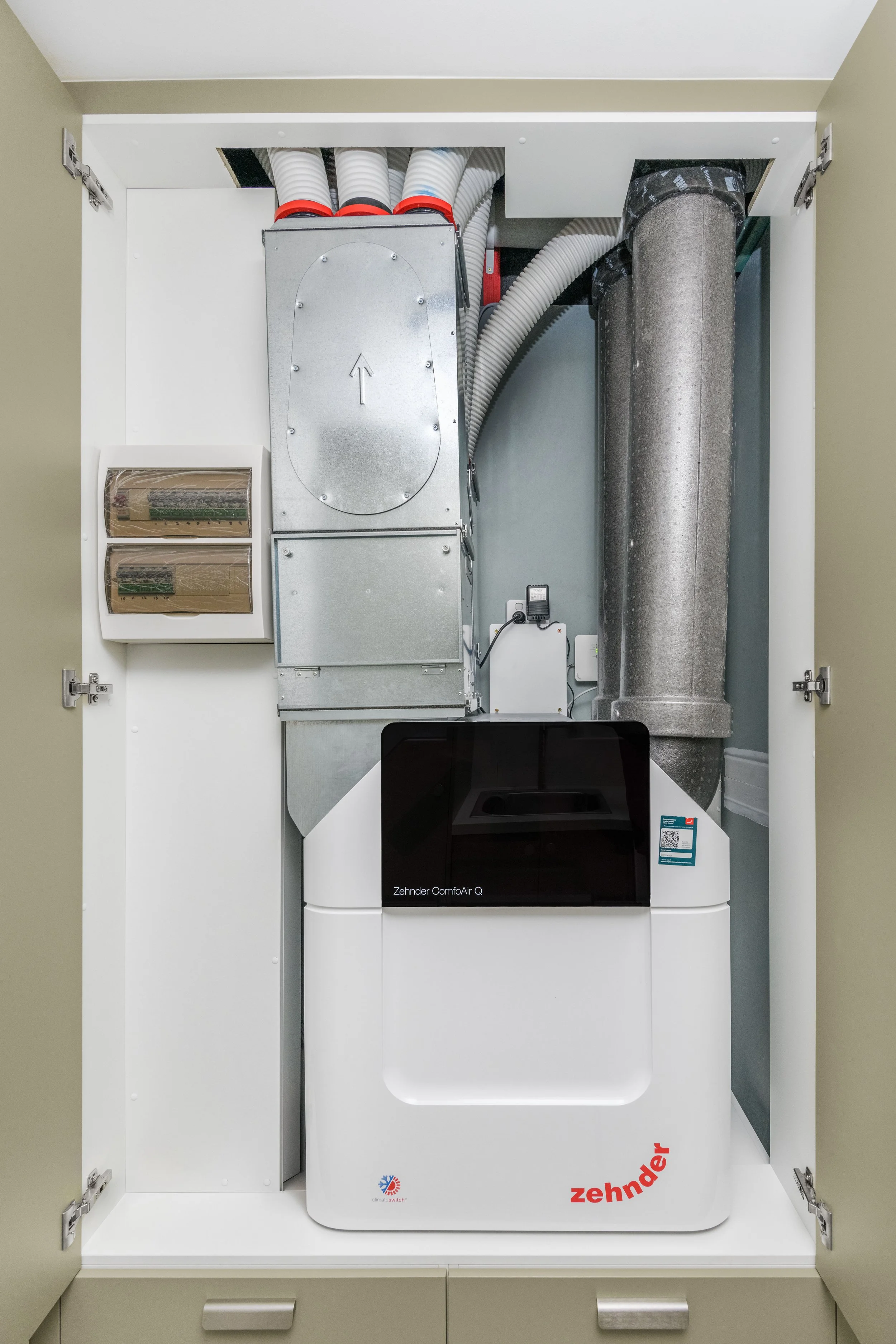
3. Ventilation with Heat Recovery (MVHR)
Fresh air without the energy waste. MVHR systems bring in filtered air and recover the heat (or cool) from the air leaving the building.
Delivers fresh air, even with the windows closed
Filters out dust, pollen, and pollution
Helps keep indoor humidity in check
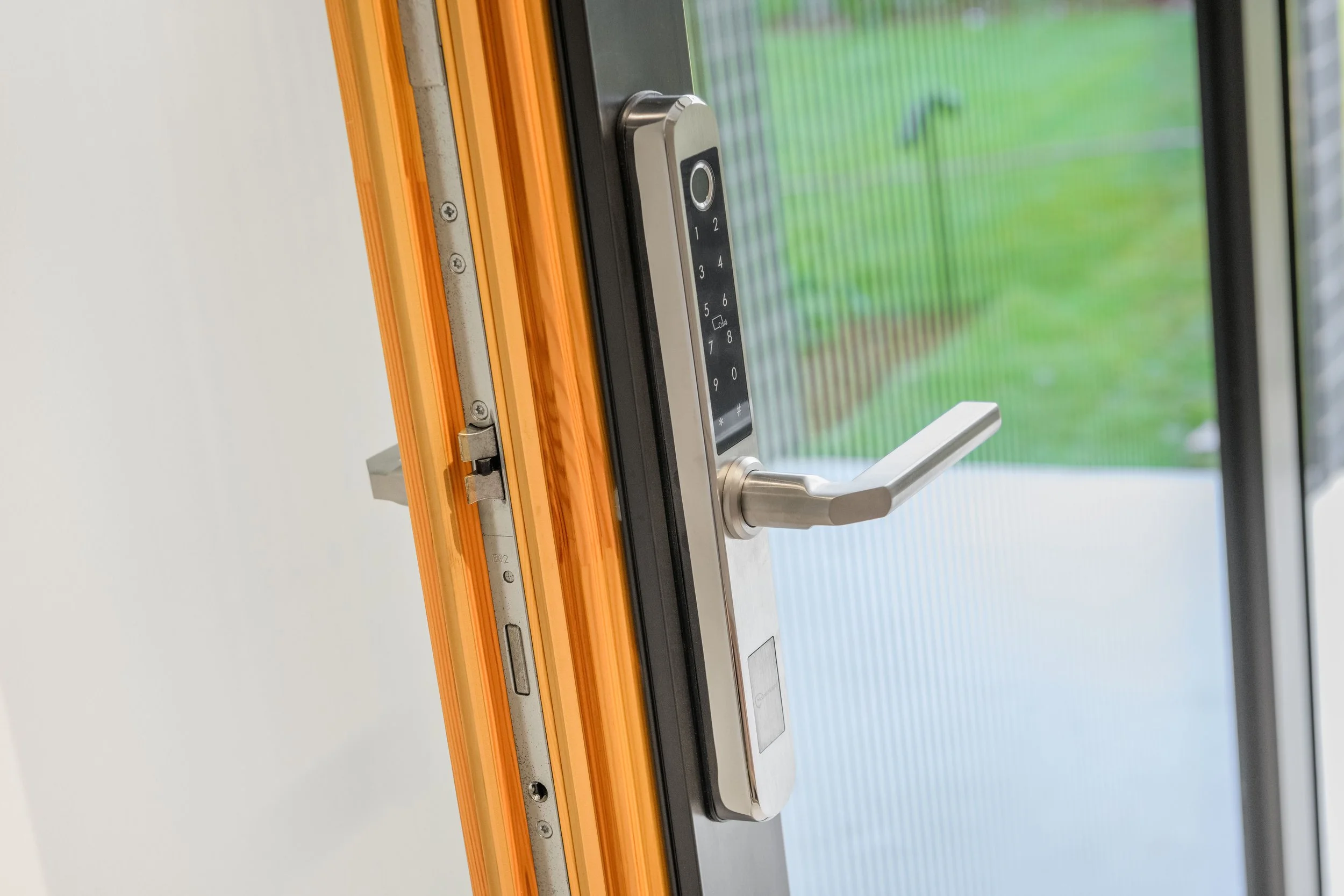
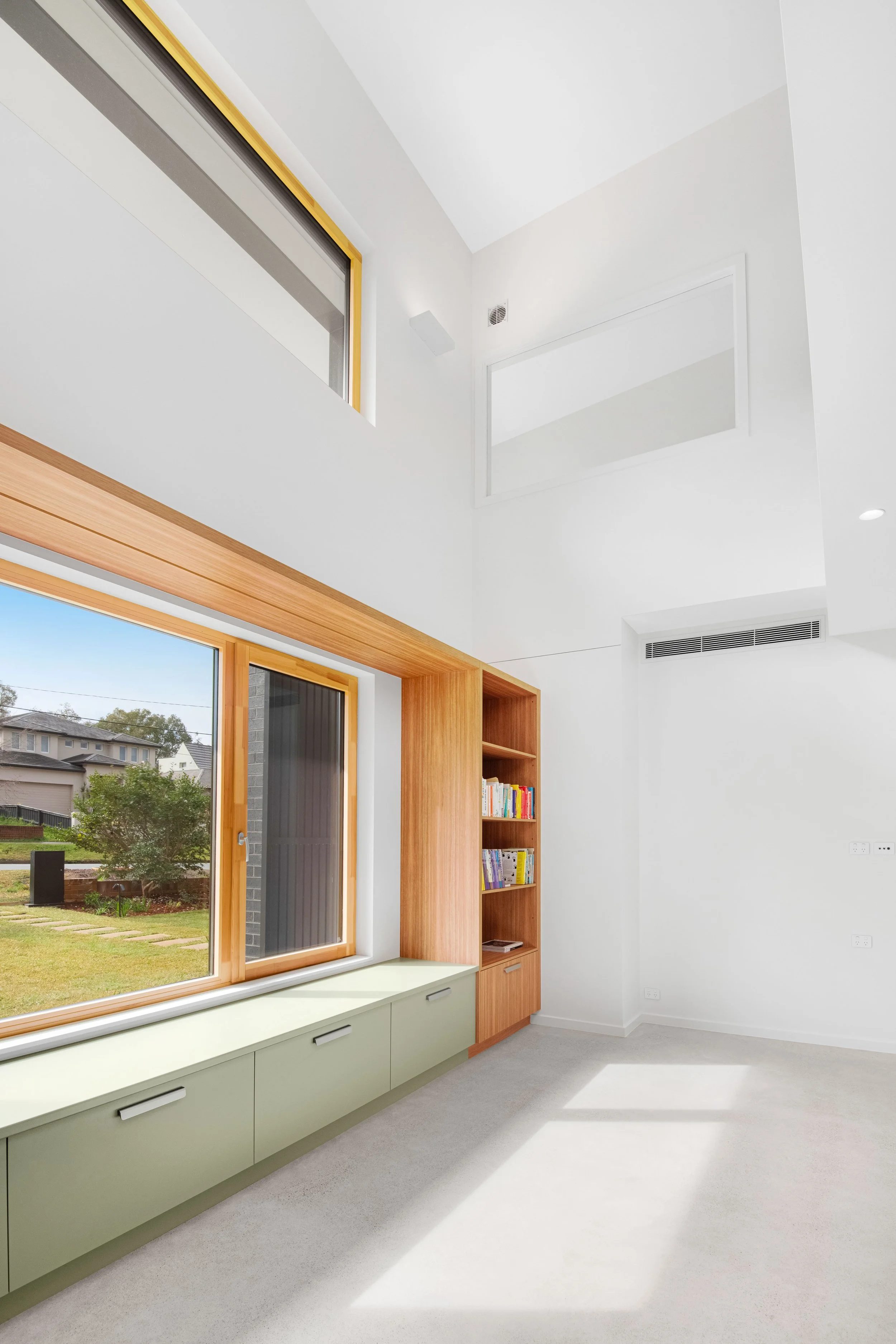
4. High-Performance Windows
Windows are a major source of heat gain and loss — so we use energy-efficient glazing and frames that are designed to perform.
Double or triple glazed
Frames made from materials with low thermal transfer
Helps with insulation and airtightness
Lets in light and warmth when you want it — and keeps heat out when you don’t
5. Thermal Bridge-Free Construction
We avoid thermal transfer through the insulation layer (called thermal bridges) where heat/cold can sneak in or out.
Keeps the whole building envelope consistent
Reduces energy loss
Helps prevent condensation in tricky corners or junctions
Why We Build Passive Homes:
At Point 6, we’re all about quality. We want to build homes that are comfortable to live in, require less energy to run, and meet the highest sustainability criteria.
Passive House gives us the framework to do that — with tested methods, measurable results, and no shortcuts.
It’s not just about ticking a box. It’s about building better for you, your family and future generations.